
From design to fabric
Colourful behind the scenes
Join the new heritage club Gif moh sjette from Texture and heritage depot Trezoor and dive into the motifs and patterns of our collection of design drawings for interior textiles. These have just been digitised for creative reuse and, via the online crowdsourcing platform DoeDat, we are trying to tag all 857 drawings together. Be warned, this could be the start of a very addictive hobby!

Design drawings
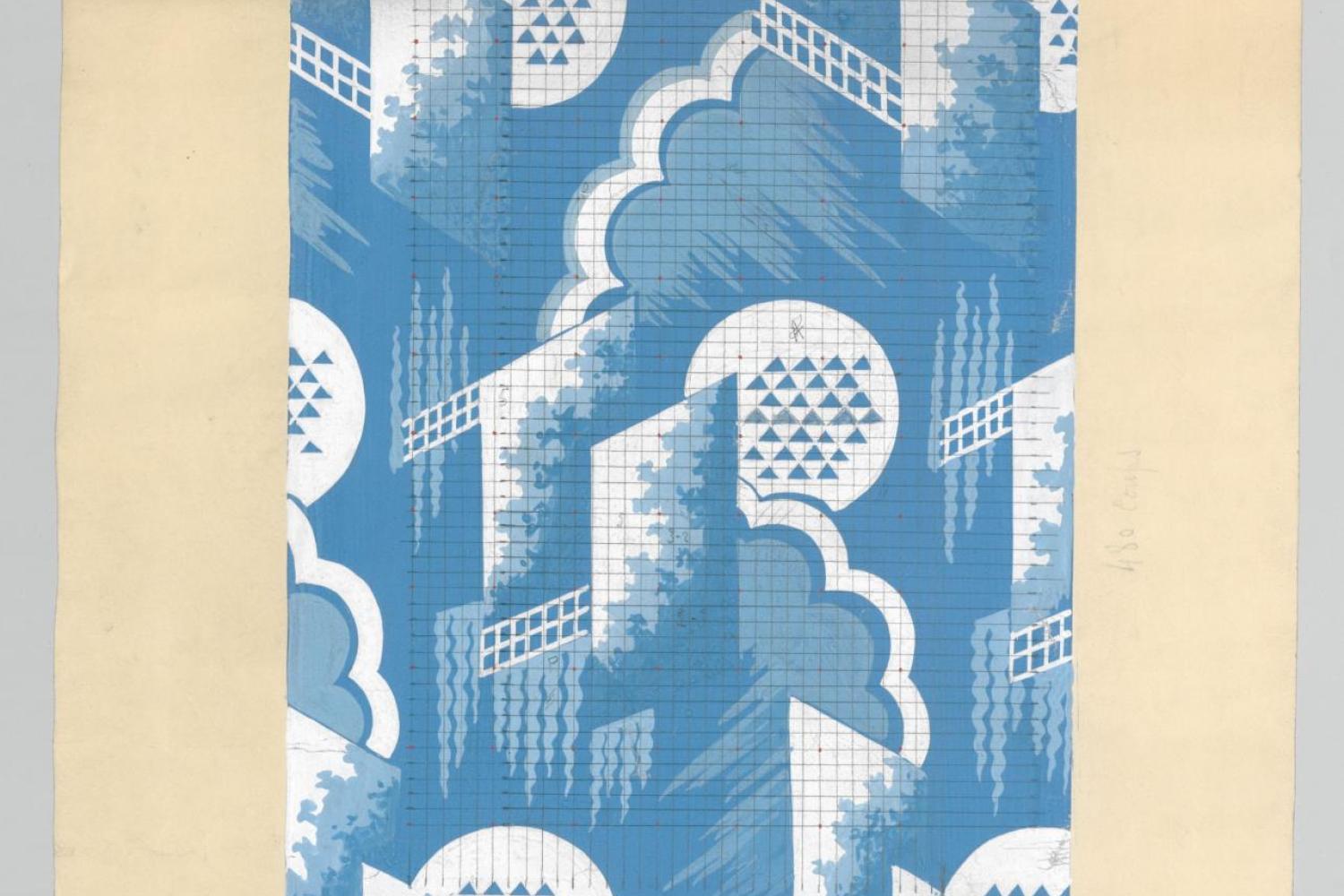
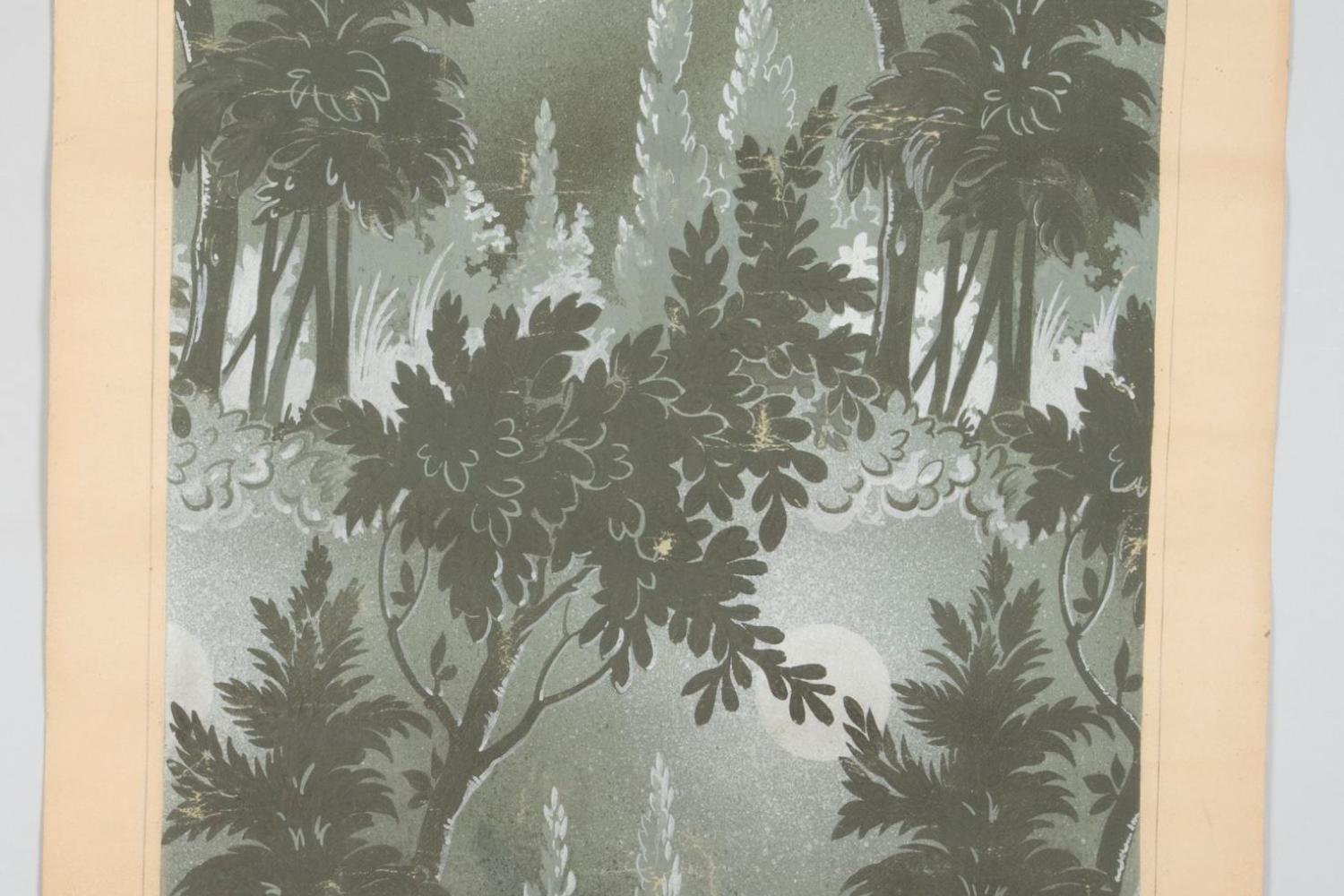
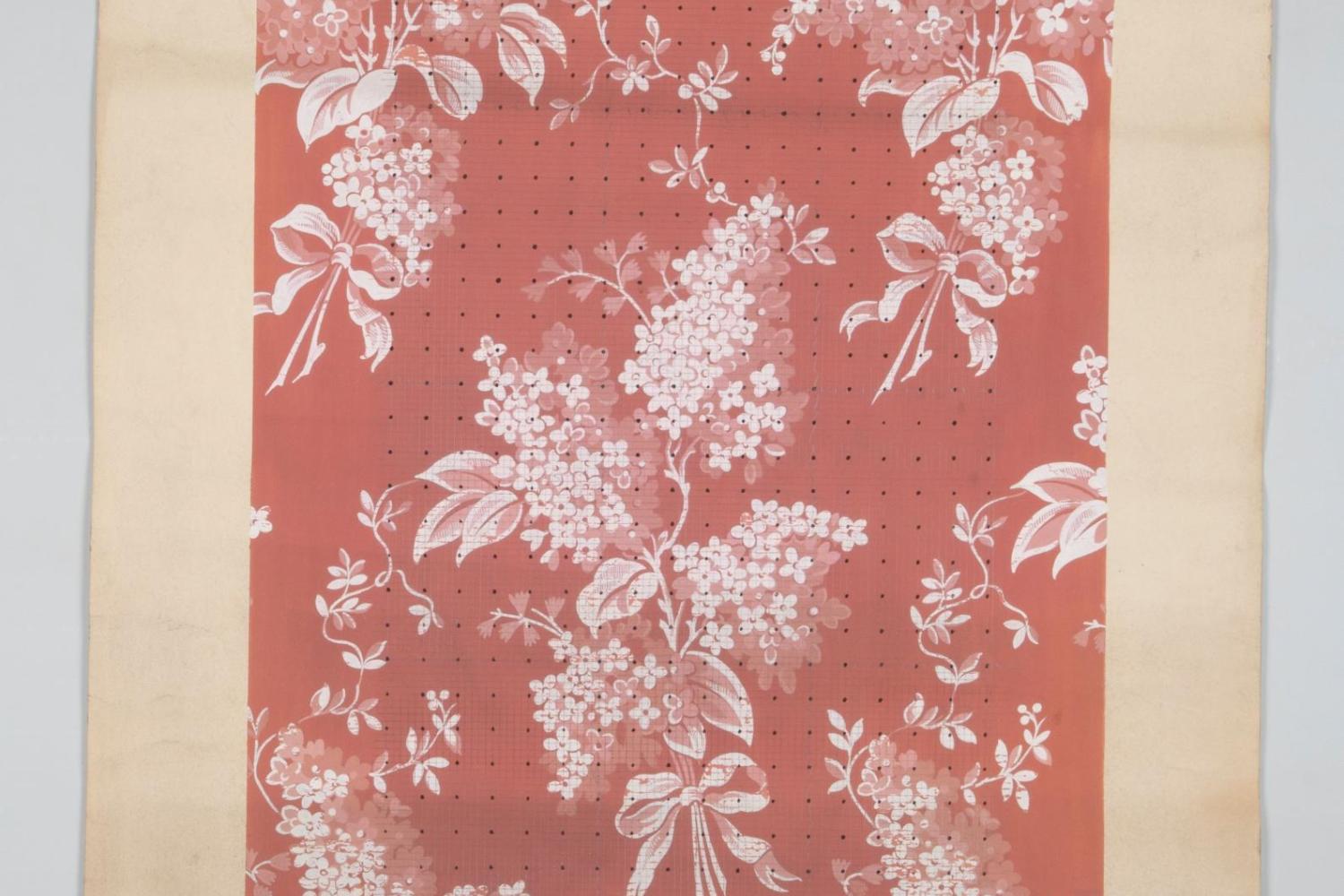
The design drawings in the Texture collection are mainly designs for woven interior textiles from the20thcentury. South-West Flanders, and specifically Kortrijk and its surroundings, was an important region for the production of interior textiles during this period.
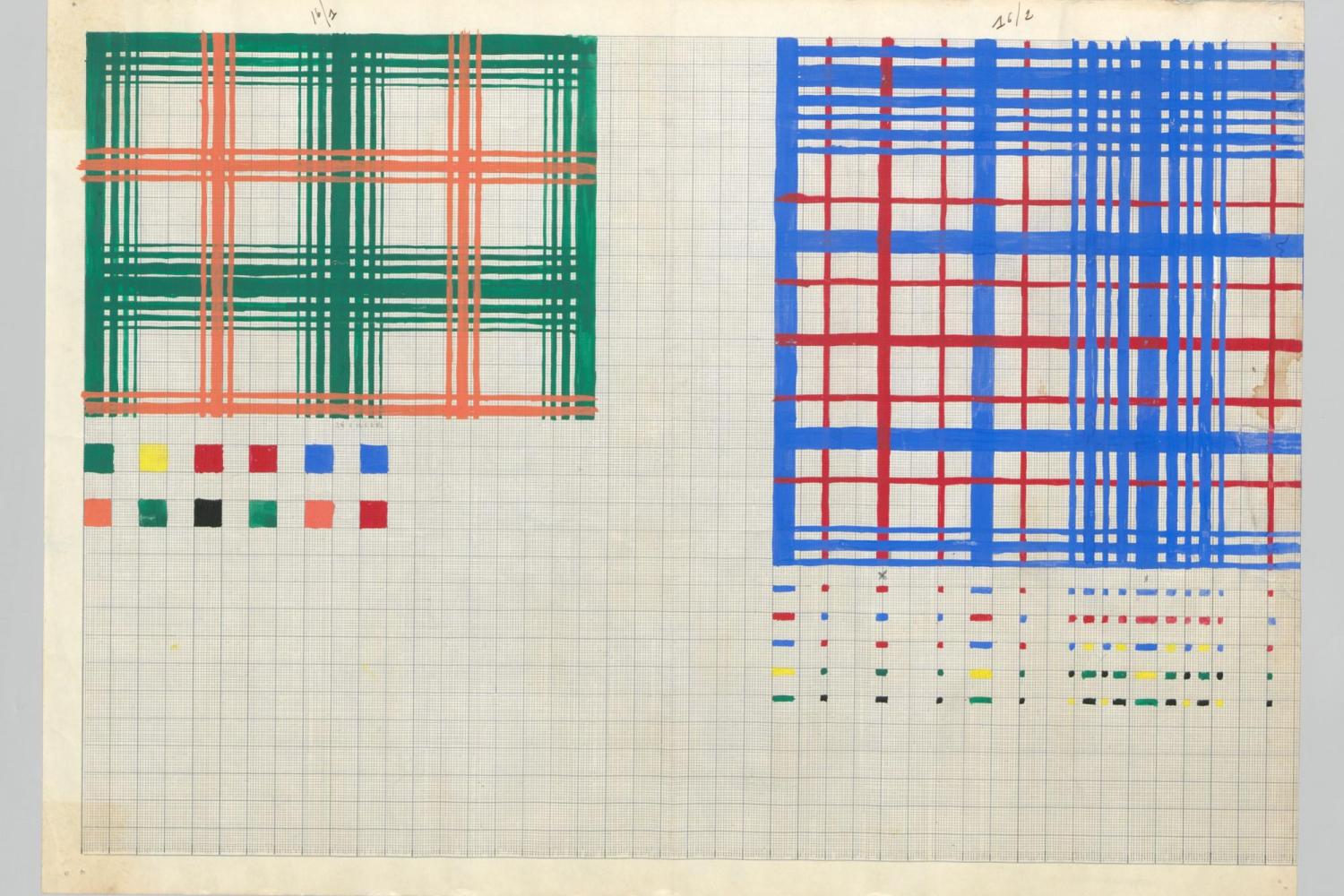
A number of steps are required to turn a design into a piece of textile. First, a design was made on paper in pencil or gouache paint. Once a design or pattern had been approved, it was converted into a card drawing on graph paper (mise-en-carte) that was tailored to the type of loom and the exact number of threads. Card cutters then converted this drawing into a cardboard card with holes, which was quite a task. The weaving machines could read these so-called punch cards (or cartons) with metal pins. In this way, complex patterns could be woven quickly and on a large scale.
All in all, it was a fascinating process in which various players worked together: designers and design agencies, card designers, cardboard cutters, weavers and entrepreneurs. Sometimes they also literally left their mark on the designs or other documents, or made notes that reveal something about their working methods. It is these kinds of traces, both on the front and back of the drawings, that we want to find and record. They give us insight into the network of players involved and the technical, artistic and business aspects that helped shape the textiles.

We need you!
The drawings are a valuable treasure trove of information for textile heritage. They are stored in the Trezoor heritage repository. In 2022-2023, all the design and map drawings in the collection were examined and photographed one by one. Until then, the drawings had been stored rolled up. In order to preserve them properly for the future, they underwent conservation treatment and were carefully flattened. They were then carefully repackaged and stored. Now that we have high-resolution photographs of the front and back of all the drawings, we can examine them more closely. And that's where you come in!
This autumn, we will continue to register and describe this special collection of Texture design drawings via the DoeDat online platform. What motifs do we see in the designs? What notes and instructions are written on them? Can we identify which individuals or companies the stamps belong to? It is not only the colorful front that is important; the back often contains interesting inscriptions as well.
Curious or already eager to help? You can do so via the DoeDat website. Here you will find all the information about the project and manuals for entering information. If you still have questions, you can ask them via lisa.tijtgat@kortrijk.be.